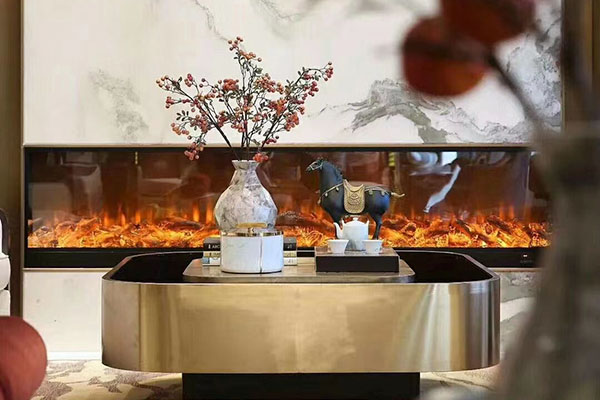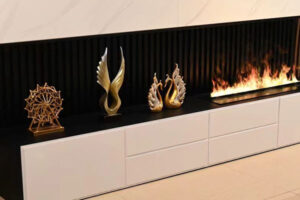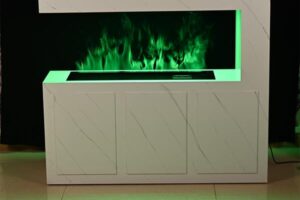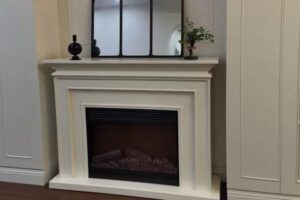
In recent years, 3D flame effects have become a major selling point in the electric fireplace and decorative heating industry. For B2B buyers—including distributors, project contractors, hospitality groups, and interior solution providers—the question is no longer whether flame effects matter, but whether 3D flame technology truly delivers a more realistic and marketable visual experience. The short answer is yes—but the value lies in understanding why and for whom they are more realistic.
Traditional electric fireplaces typically rely on 2D flame effects created by rotating mirrors, basic LED reflections, or flat flame panels. While these solutions are cost-effective and suitable for entry-level applications, they often lack depth. The flame appears layered on a single visual plane, which can feel artificial, especially in modern interiors where consumers expect higher visual authenticity.
3D flame effects, by contrast, are designed to simulate depth, movement, and natural flame behavior. This is achieved through a combination of multi-layer LED projection, dynamic light refraction, and sometimes mist or water vapor technology. The result is a flame that appears to exist within space rather than on a surface. For commercial buyers, this added realism directly translates into stronger showroom appeal, higher perceived product value, and improved end-user satisfaction.
Another key advantage of 3D flame technology is flame dynamics. Advanced systems allow for adjustable flame height, brightness, speed, and color temperature. This variability more closely resembles the unpredictable movement of real fire. In hospitality, residential developments, and premium retail environments, such flexibility allows designers and operators to tailor the ambiance to different times of day or branding concepts without physical modifications.
From a market positioning perspective, 3D flame effects also support premium segmentation. Products featuring realistic 3D flames are easier to position as high-end decorative solutions rather than simple electric heaters. This is particularly important in regions where fireplaces are used primarily for ambiance rather than heat, such as luxury apartments, hotels, and commercial spaces. For B2B partners, this means higher margins and clearer differentiation from low-cost competitors.
It is also worth noting that realism does not come at the expense of efficiency or safety. Modern 3D flame electric fireplaces are energy-efficient, maintenance-friendly, and compliant with international safety standards. They offer the visual impact of a real flame without emissions, fuel storage, or ventilation requirements—an increasingly important factor for developers and project-based buyers.
In conclusion, 3D flame effects are more realistic not only in appearance, but in how they align with today’s design expectations and commercial requirements. For B2B buyers seeking to enhance product portfolios, attract premium clients, and deliver visually compelling solutions, 3D flame technology represents a clear and strategic upgrade over traditional flame effects.