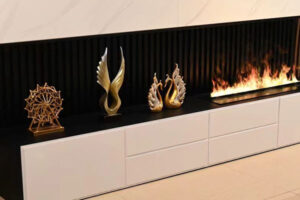
As electric fireplaces continue to gain popularity in both residential and commercial projects, buyers are increasingly focused on flame technology. Among the most common options on the market are LED electric fireplaces and LCD electric fireplaces. While both serve the same core purpose—delivering a clean, safe, and visually appealing fireplace experience—their underlying technologies, performance characteristics, and commercial suitability differ in important ways. Understanding these differences is essential for distributors, developers, and project buyers making informed sourcing decisions.
LED Electric Fireplaces: Practical, Efficient, and Scalable
LED electric fireplaces use LED light sources combined with reflective panels, rotating components, or layered flame beds to simulate flame movement. This technology has been widely adopted due to its cost efficiency, reliability, and low energy consumption.
From a B2B perspective, LED fireplaces are particularly attractive for large-scale projects such as apartments, hotels, serviced residences, and retail spaces. The technology is mature and stable, resulting in lower production costs, consistent quality, and easier customization in terms of size, flame color, brightness, and installation format (wall-mounted, built-in, or freestanding).
LED systems also offer strong durability. LEDs have long operating lifespans, require minimal maintenance, and perform well in different climates. This makes them suitable for markets where long daily usage is common or where after-sales servicing needs to be minimized. In addition, LED electric fireplaces typically support optional heating functions, remote control, and smart-home integration, making them a well-rounded commercial solution.
LCD Electric Fireplaces: High Visual Realism at a Premium
LCD electric fireplaces rely on high-definition LCD screens to display pre-rendered or video-based flame visuals. As a result, they can deliver exceptionally realistic flame effects, including detailed ember movement, smoke-like visuals, and depth that closely resembles a real fire.
This technology is often positioned at the premium end of the market, appealing to luxury residential projects, high-end hospitality, or showcase installations where visual impact is the top priority. However, the advanced display technology comes with higher costs, both in manufacturing and final pricing. LCD fireplaces also tend to have more limitations in size scalability and viewing angles, and they rely heavily on the quality of the screen panel.
From a commercial standpoint, LCD fireplaces may require more careful positioning, stable power conditions, and higher budgets, which can limit their suitability for mass-market or price-sensitive projects.
Which Technology Is Better for B2B Buyers?
The choice between LED and LCD electric fireplaces ultimately depends on project positioning, budget, and market demand. LED fireplaces offer a balanced combination of aesthetics, efficiency, flexibility, and cost control, making them the preferred option for most B2B applications. LCD fireplaces, while visually impressive, are best suited for niche, design-driven projects where premium presentation outweighs scalability and cost considerations.
For manufacturers, distributors, and project developers, understanding these distinctions helps align product selection with end-user expectations and long-term commercial value.