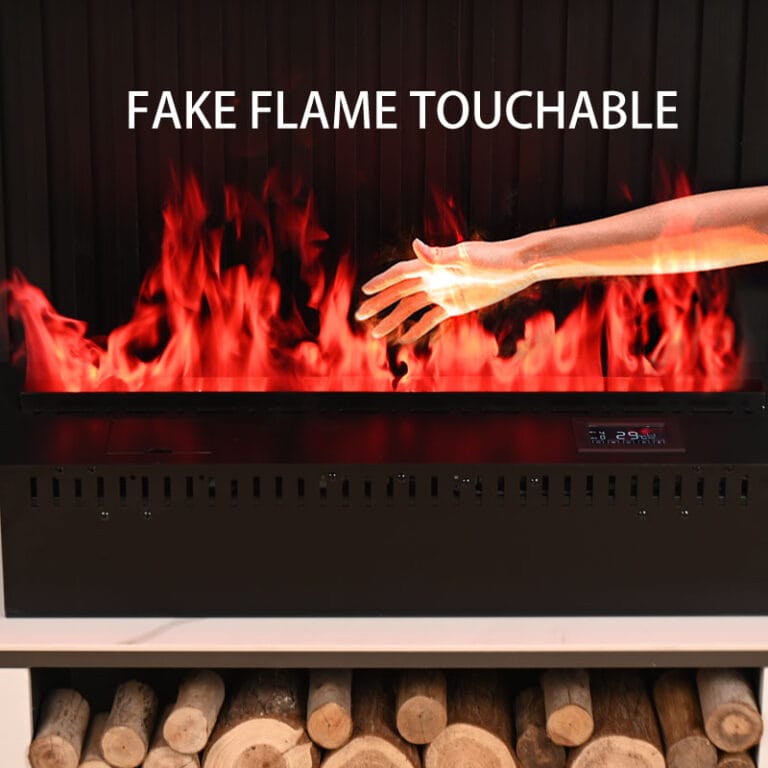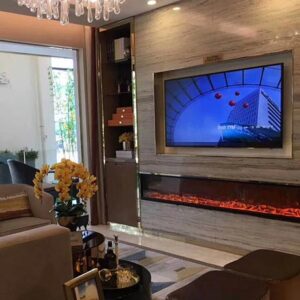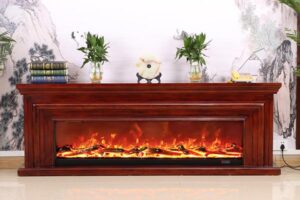
Water vapor fireplaces, also known as mist fireplaces, are increasingly popular in commercial and residential projects worldwide. A common question from distributors, project contractors, and brand owners is whether these fireplaces generate heat. The short answer is: water vapor fireplaces do not produce real heat. However, understanding why this is an advantage requires a closer look at their technology and how different markets use them.
How Water Vapor Fireplaces Work
Water vapor fireplaces use ultrasonic technology to transform water into a fine mist, which is then illuminated by LED lights to create a realistic flame and smoke effect. Because there is no real combustion, heating element, or burning fuel, the unit remains cool to the touch. Any slight warmth felt is typically residual heat from the LED lighting or internal electronics, not a functional heat output.
Safety and Functional Advantages
The absence of heat is a key benefit rather than a limitation. Water vapor fireplaces are inherently safe, making them suitable for public spaces, hotels, shopping malls, offices, and family homes. There is no risk of burns, carbon emissions, or fire hazards, and no need for chimneys, gas lines, or special ventilation. This significantly reduces installation complexity and long-term maintenance costs for B2B buyers.
Usage Trends in the Middle East
In Middle Eastern markets, where ambient temperatures are high for most of the year, heating is rarely a priority. Water vapor fireplaces are primarily used as luxury decorative features in hotels, villas, commercial lobbies, and upscale residences. The cool operation aligns perfectly with air-conditioned environments, allowing designers to add a fireplace aesthetic without increasing indoor temperature or energy load.
Applications in Southeast Asia
Southeast Asia shares similar climate characteristics—high humidity and warm temperatures year-round. Here, water vapor fireplaces are valued for their visual impact and safety, particularly in hospitality projects, restaurants, and modern apartments. Since there is no heat output, they can be operated continuously as an ambient feature without compromising comfort or increasing cooling costs.
European Market Perspective
In Europe, fireplaces traditionally serve as both decorative and heating appliances. Water vapor fireplaces are therefore positioned differently: they are often used as supplementary or alternative solutions in apartments, commercial buildings, or renovation projects where chimneys, gas, or wood-burning systems are impractical or restricted by regulations. Many European buyers appreciate the flame realism combined with zero emissions and compliance with strict environmental standards, even if heat is not required.
Conclusion
Water vapor fireplaces do not put off heat, but this characteristic is precisely what makes them versatile across global markets. For B2B buyers, they offer a safe, visually striking, and regulation-friendly fireplace solution suitable for diverse climates and applications. As demand grows for eco-friendly and design-focused interior features, water vapor fireplaces continue to represent a strong commercial opportunity in the Middle East, Southeast Asia, and Europe alike.