Water vapor fireplaces have gained traction across hospitality, residential and commercial projects because they deliver realistic flame effects without combustion, chimneys or fuel. For B2B buyers evaluating options for the Middle East, Southeast Asia and Europe, cost is driven by product tier, installation requirements, certification and after-sales service. Below is a practical guide to pricing and regional buying considerations.
Typical price tiers
Entry-level and tabletop water-vapor units can start in the low hundreds of dollars (often $300–$800), suited for retail, small showrooms or sample rooms. Mid-range wall-mounted and built-in units typically fall between $800 and $3,500, while high-end or large commercial systems — including multi-sided, integrated HVAC or custom architectural installations — can exceed $4,000 and reach into the tens of thousands for premium brands.
What determines the price?
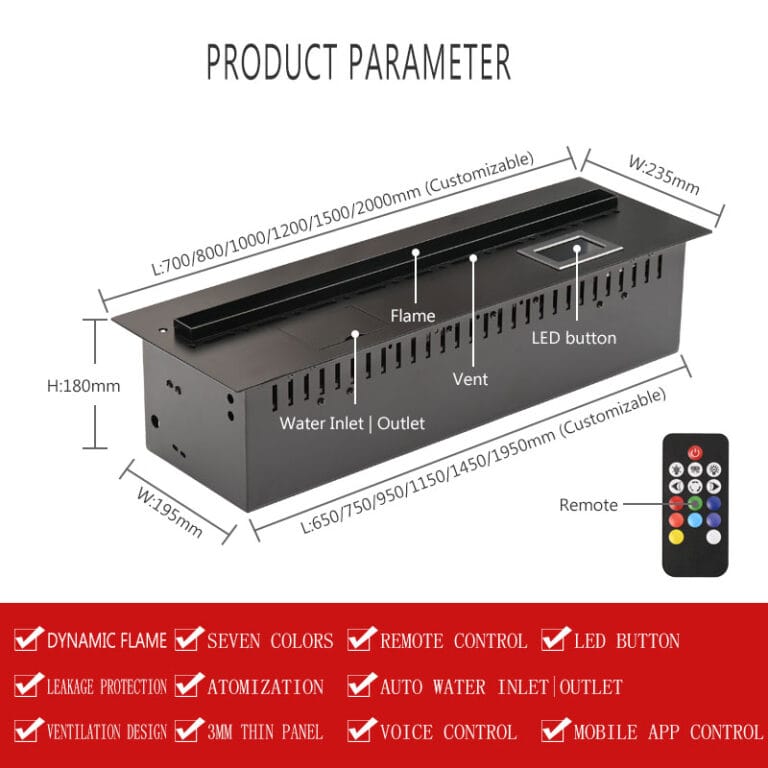
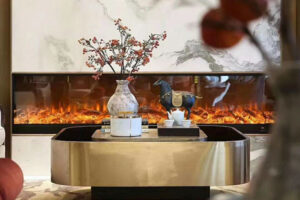
Size and viewing configuration (single vs. three-sided), realism technology (multi-color LEDs, flame dynamics), integrated heating capability, water-treatment/filtration systems, smart controls and build materials all materially affect cost. Commercial grade units also require heavier-duty pumps, filters and service contracts — increasing up-front price but reducing lifecycle risk.
Regional purchasing patterns and implications
Middle East: Luxury fit-outs and hospitality projects often specify high-visual-fidelity, custom finishes and integrated controls; buyers accept higher unit costs for branded, serviced solutions. Local listings show water-vapor fireplaces offered at premium retail prices (example listings in AED), reflecting demand for design-led, ready-to-install products. For B2B procurement, warranty, service presence and timely shipping are decisive.
Southeast Asia: Markets prioritize cost-effective decorative solutions that emphasize aesthetics over heating functionality because of warmer climates. Price sensitivity and preference for lower MOQ and rapid delivery make mid-range imported units and locally assembled options attractive. Import duties and logistics should be factored into landed cost.
Europe: Buyers expect CE compliance, robust energy-use disclosures and durable components. Mid-to-high price points are common for factory-certified models stocked by regional dealers; bespoke architectural installations command premium pricing. Lead times and certification documentation often influence vendor selection.
Commercial procurement tips
Request a total cost of ownership quote that includes unit price, installation, water-filtration consumables, expected maintenance intervals and spare-parts availability. Verify certifications (e.g., CE) and ask for case studies in similar climate or hospitality projects. For volume purchases, negotiate MOQ, lead time and warranty terms up front.
Conclusion
Expect a broad price spectrum: from a few hundred dollars for small decorative pieces to several thousand for integrated commercial systems. Your final cost will hinge on size, features, certification and regional service commitments — factors that should guide supplier selection and budget planning. For tailored quotations and comparison of models suited to your target markets, request specification sheets and landed-cost estimates from shortlisted vendors.