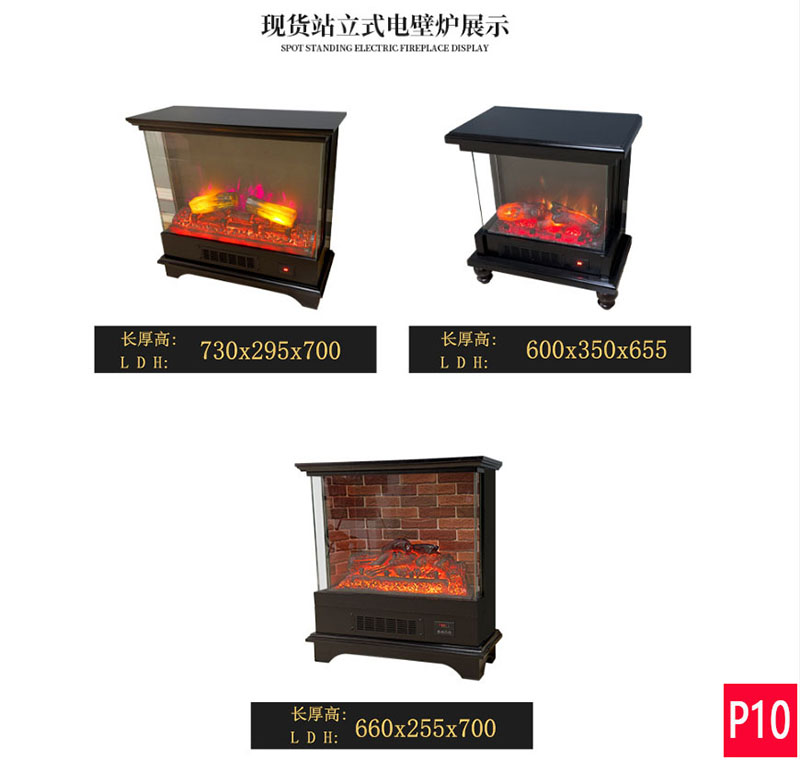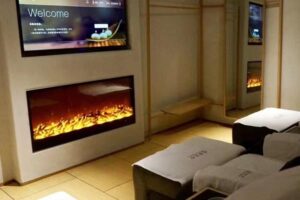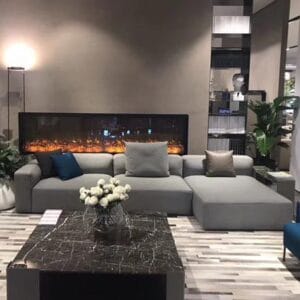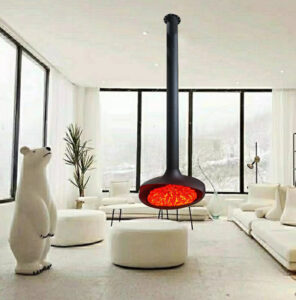
A freestanding fireplace is a self-contained heating appliance that requires no permanent installation to a wall or chimney, offering exceptional flexibility in placement across residential villas, commercial hotels, and even outdoor lounges. Unlike built-in counterparts, it integrates a complete combustion system, heat emission structure, and multi-layer safety protection in a single unit, seamlessly blending with diverse architectural styles while delivering efficient heating and high-end aesthetic value. As a versatile heating solution, it adapts to varying climate conditions and regional usage habits, gaining significant traction in key markets including the Middle East, Southeast Asia, and Europe.
In the Middle East, where winters are mild but nighttime temperatures drop sharply, freestanding fireplaces dual-function as practical heating tools and luxury decorative elements. Markets like the UAE, Saudi Arabia, and Qatar favor models with elegant finishes—such as polished marble, brushed brass, or gold accents—to complement high-end villas, five-star hotels, and upscale restaurants. Due to local energy policies and abundant natural gas resources, gas-powered freestanding fireplaces are the preferred choice, valued for their cost-effectiveness, stable heat output, and ability to avoid reliance on inconsistent electric grids. Additionally, silent operation and easy maintenance are key criteria for local B2B buyers, catering to hospitality and residential projects.
Southeast Asia’s demand is concentrated in high-altitude areas like Chiang Mai (Thailand), Bali (Indonesia), and the Cameron Highlands (Malaysia), where cool seasons (November to February) call for mild, targeted heating. Compact, portable freestanding fireplaces powered by ethanol or electricity dominate this market, as they fit small living spaces, apartments, and boutique resorts while aligning with regional eco-friendly trends. Local buyers prioritize corrosion resistance and waterproof performance to adapt to the humid tropical climate, making food-grade stainless steel and powder-coated models top selections. Ethanol variants are particularly popular for their smokeless, odorless operation, suitable for indoor use without ventilation.
Europe, a mature and sophisticated fireplace market, balances traditional aesthetics with strict energy efficiency standards. In Western Europe—France, Germany, and the UK—wood-burning freestanding fireplaces cater to a deep-rooted preference for natural heating and rustic charm, commonly used in country cottages, historic manors, and chateaux. Eastern Europe (Poland, Hungary, and the Czech Republic) leans toward multi-fuel models compatible with wood, pellets, and biomass, driven by cost savings and accessibility to renewable fuels. EU energy labels (e.g., ERP Directive) and emission regulations drive demand for low-carbon units, with thermal efficiency exceeding 75% and low particulate matter emissions being mandatory criteria for market entry.
For B2B partners—including distributors, hospitality suppliers, and architectural firms—understanding these regional nuances is critical to market penetration. Freestanding fireplaces’ unique adaptability to diverse needs, from Middle Eastern luxury decor to European energy-saving requirements, positions them as a high-potential product. Customizing designs, fuel systems, safety features, and material specifications to local market demands not only enhances product competitiveness but also unlocks long-term growth opportunities in global markets.