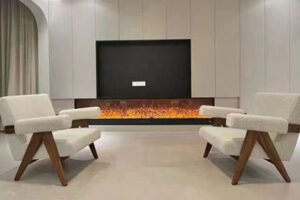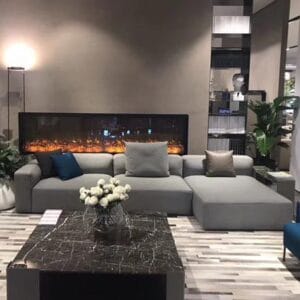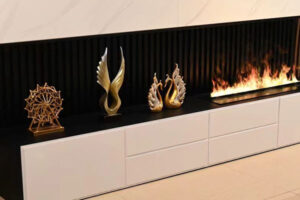
With the growing influence of modern interior design across the Middle East and Southeast Asia, electric fireplaces are increasingly appearing in residential and commercial spaces. From luxury villas and apartments to hotels, cafés, and shopping centers, these products are no longer seen as seasonal heating appliances but as stylish lifestyle features. This leads many buyers to ask: are electric fireplaces really useful in warm-climate regions?
The answer depends on how they are used—and in these markets, their value extends far beyond traditional heating.
Designed for Ambience and Lifestyle, Not Harsh Winters
Unlike colder regions where fireplaces are primarily used for heating, customers in the Middle East and Southeast Asia focus more on ambience, visual comfort, and design impact. Electric fireplaces excel in this area. Advanced LED flame technologies, 3D effects, and customizable flame colors create the cozy atmosphere of a real fire without smoke, ash, or excessive heat.
In hotels, restaurants, coffee chains, and high-end residences, electric fireplaces often serve as a design focal point, enhancing the overall atmosphere and customer experience. Even when the heating function is turned off, the flame effect alone adds warmth and sophistication to a space, making it suitable for year-round use.
Flexible and Practical Heating When Needed
Although heating is not a daily necessity in these regions, light and controllable warmth can still be beneficial. Cooler desert evenings, strong air conditioning, and seasonal temperature changes make electric fireplaces a practical option for zone heating.
Most models provide adjustable heat output suitable for small to medium-sized areas, allowing users to warm a specific space without affecting the entire building’s climate system. Importantly, the flame and heating functions can be controlled separately, offering maximum flexibility and energy efficiency.
Easy Installation and Project-Friendly Solutions
One of the biggest advantages of electric fireplaces is their simple installation. They do not require chimneys, gas connections, or major construction work, which makes them ideal for apartments, rental properties, hotels, and commercial projects.
Wall-mounted, recessed, and freestanding models can be installed quickly, reducing project timelines and installation costs. For developers and designers, this flexibility allows greater freedom in layout planning while meeting modern safety and design standards.
Safe, Clean, and Environmentally Responsible
Safety is a key consideration for families and public spaces. Electric fireplaces produce no open flames, no harmful emissions, and no carbon monoxide. Many models feature cool-touch glass, overheat protection, and child safety locks, making them a reliable choice for homes with children or pets.
From an environmental perspective, electric fireplaces align well with sustainable building trends. They are energy-efficient, clean to operate, and compatible with eco-friendly development goals increasingly adopted across both regions.
Understanding Their True Value
Electric fireplaces are not intended to replace central heating systems or heat large open areas. Their true strength lies in ambience creation, targeted comfort, and aesthetic enhancement. When used with realistic expectations, they offer excellent value and high user satisfaction.
Final Thoughts
So, are electric fireplaces really useful in the Middle East and Southeast Asia? Yes—when selected for the right purpose. They combine modern design, safety, flexibility, and subtle heating into one elegant solution. For residential, hospitality, and commercial projects seeking visual warmth without complexity, electric fireplaces are a practical and forward-looking investment.